1.
TEMPERATURE
- Temperature
must be maintained within the narrow range that allows wine to
develop and to improve with bottle age. This narrow range has
two aspects, daily fluctuation and annual fluctuation.
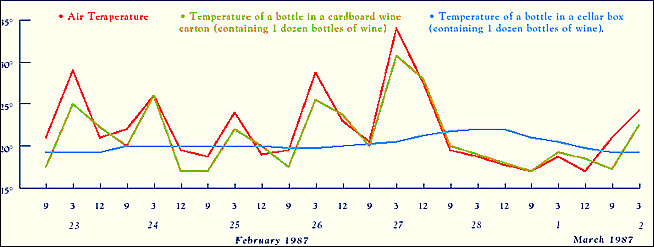
- Daily
fluctuation must be minimal. It is this fluctuation, if wide enough,
which causes the greatest harm to maturing wine. It should not
exceed 2°C within a 24 hour period.
- Annual
fluctuation should not be wider than a 12°C-14°C, low
point in winter and a 22°C-24°C, high point in summer.
|
|
1.
TEMPERATURE
- The
Cellar Box is moulded using high density cellular styrene.
- A
minimum thickness of 5cms, gives it insulation properties that
limit daily fluctuation to 1°C.
- Correctly
used, the Cellar Box keeps the annual range of fluctuation between
a low of 12°C - 14°C, in winter and a high of 21°C
- 23°C in summer.
|